

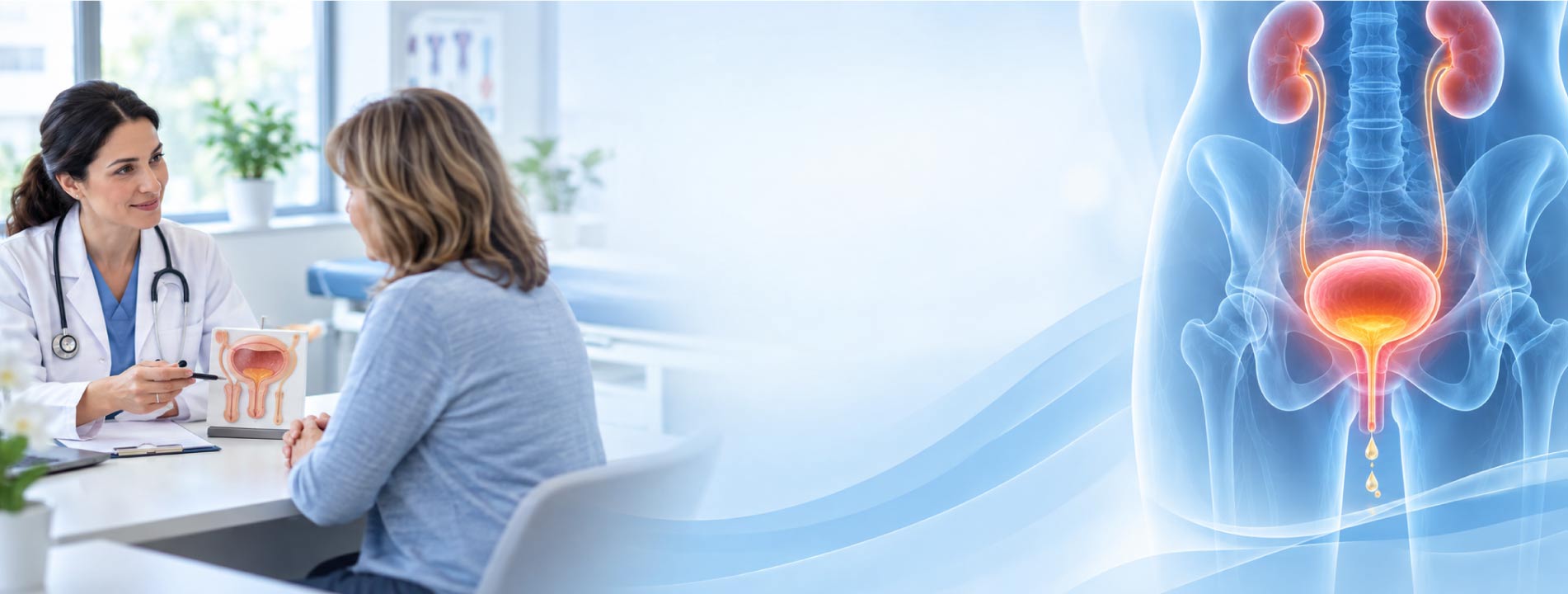
Urinary incontinence is the involuntary loss of urine caused by reduced or lost bladder control. Although it can be difficult to talk about, it is a common condition that affects both men and women. It may range from occasional urine leakage to more significant bladder control problems that can interfere with daily activities, sleep, confidence, and overall quality of life.
Patients looking for urinary incontinence treatment in Basavanagudi, Bangalore can benefit from an accurate diagnosis to identify the type and cause of the condition. Urinary incontinence is often manageable, and treatment can be personalised based on the patient’s symptoms, severity, and underlying urinary or urological condition.
Types, Symptoms & Causes of Urinary Incontinence
Urinary incontinence can occur in different forms. Identifying the type of incontinence is important because treatment may vary depending on the underlying cause and pattern of urine leakage.
Types of Urinary Incontinence
- Stress Urinary Incontinence: Urine leakage may occur during activities that increase pressure on the bladder, such as coughing, sneezing, laughing, exercising, or lifting heavy objects.
- Urge Urinary Incontinence (Overactive Bladder): This involves a sudden and strong urge to urinate that may be difficult to control, sometimes resulting in urine leakage before reaching the toilet.
- Overflow Incontinence: This can occur when the bladder does not empty completely, leading to frequent dribbling or leakage. It may be associated with conditions such as an enlarged prostate.
- Mixed Urinary Incontinence: Mixed incontinence refers to a combination of more than one type of urinary incontinence, such as stress and urge incontinence occurring together.
- Functional Incontinence: Urine leakage may occur because physical, mobility, or cognitive limitations make it difficult to reach the toilet in time.
Common Symptoms
Recognising urinary incontinence symptoms can help patients seek appropriate evaluation and treatment. Common symptoms may include:
- Urine leakage during coughing, sneezing, laughing, or exercising
- Sudden and uncontrollable urge to urinate
- Frequent urination during the day
- Night-time urination (nocturia)
- Feeling that the bladder has not emptied completely
- Continuous or frequent urine leakage
Common Causes & Risk Factors
Urinary incontinence may develop due to several factors affecting the bladder, urinary tract, pelvic floor, prostate, or nervous system.
- Weak pelvic floor muscles
- Pregnancy and childbirth
- Age-related changes
- Menopause
- Enlarged prostate
- Previous prostate surgery
- Neurological disorders
- Obesity
- Chronic cough
- Urinary tract infections
Diagnosis of Urinary Incontinence
A detailed evaluation can help determine the type and cause of urinary incontinence. This allows the treatment plan to be tailored to the patient’s symptoms and underlying condition.
Clinical Evaluation
- Medical History: The doctor may ask about the pattern of urine leakage, duration of symptoms, urinary habits, medications, previous surgeries, and relevant obstetric or medical history.
- Physical Examination: Depending on the patient’s symptoms, the evaluation may include a pelvic examination in women or a prostate examination in men.
- Bladder Diary: Patients may be asked to record fluid intake, frequency of urination, urgency, and episodes of urine leakage over several days.
Diagnostic Tests
Depending on the clinical findings, the doctor may recommend one or more of the following tests:
- Urinalysis: A urine test may be used to identify infection, blood, or other abnormalities.
- Blood Tests: Blood tests may be recommended based on the patient’s medical condition and symptoms.
- Ultrasound: An ultrasound of the kidneys and bladder may help assess the urinary system and identify structural problems.
- Post-Void Residual Urine Measurement: This test measures the amount of urine left in the bladder after urination.
- Urodynamic Study: Urodynamic testing evaluates how the bladder and urethra store and release urine.
- Cystoscopy: When indicated, cystoscopy allows the doctor to directly examine the bladder and urethra using a thin scope.
Urinary Incontinence Treatment Options
Treatment for urinary incontinence depends on the type of incontinence, severity of symptoms, underlying cause, and the patient’s overall health. Treatment may begin with conservative measures before progressing to medications, minimally invasive procedures, or surgery when required.
Lifestyle & Conservative Management
- Fluid Management: Adjusting the amount and timing of fluid intake may help reduce urinary urgency and leakage.
- Bladder Training: Scheduled urination and gradually increasing the time between bathroom visits may help improve bladder control.
- Weight Management: Weight reduction may help decrease pressure on the bladder and pelvic floor in some patients.
- Dietary Modifications: Reducing bladder irritants such as caffeine and alcohol may help improve symptoms.
- Pelvic Floor Exercises: Kegel exercises may help strengthen pelvic floor muscles and are commonly used as part of pelvic floor disorder treatment.
Medications
Medication may be recommended depending on the type and cause of urinary incontinence.
- Medicines for overactive bladder that help reduce urgency and involuntary bladder contractions
- Medicines that address an underlying cause, such as prostate-related medications in selected male patients
Minimally Invasive Procedures
When lifestyle changes and medications do not provide adequate improvement, minimally invasive urology treatments may be considered.
- Urethral Bulking Agent Injections: Bulking agents may be injected around the urethra to help improve urinary control in selected patients.
- Botulinum Toxin (Botox) Injections: Botox may be injected into the bladder muscle to help reduce overactive bladder contractions.
- Sacral Neuromodulation: This treatment uses electrical stimulation of the nerves involved in bladder control.
- Tibial Nerve Stimulation: This is a minimally invasive nerve stimulation technique that may be used for overactive bladder symptoms.
These options may be considered as part of modern overactive bladder and minimally invasive urinary incontinence treatment, depending on the patient’s diagnosis and response to conservative management.
Surgical Treatment
Surgery may be considered when conservative treatment, medication, and minimally invasive approaches do not provide adequate symptom control.
- Mid-Urethral Sling Surgery: Commonly used for stress urinary incontinence in selected patients.
- Artificial Urinary Sphincter: This may be considered in men with significant urinary incontinence, particularly after prostate surgery.
- Male Sling Procedure: A sling may be used in selected male patients with stress urinary incontinence.
- Robotic-Assisted Reconstructive Surgery: In complex cases, robotic or reconstructive procedures may be considered when clinically appropriate.
Why Choose Dr Vishnu Prasad for Urinary Incontinence Treatment in Basavanagudi, Bangalore?
Dr Vishnu Prasad has experience in diagnosing and managing a range of urinary and urological conditions, including bladder control problems, urinary leakage, prostate-related conditions, and other disorders affecting the urinary tract.
Patients looking for urinary leakage treatment in Basavanagudi, Bangalore can consult Dr Vishnu Prasad for an evaluation of the type and cause of incontinence and to determine whether lifestyle changes, medication, minimally invasive treatment, or surgery may be appropriate.
His clinical expertise includes urology, uro-oncology, minimally invasive urology, and robotic surgery. As a robotic surgeon in Basavanagudi, Bangalore, he also manages selected complex urological conditions where advanced surgical techniques may be required.
Book an appointment with Dr Vishnu Prasad for evaluation and appropriate urinary incontinence treatment.
Frequently Asked Questions
Urinary incontinence is the involuntary leakage of urine due to a lack of bladder control.
Urinary incontinence can be caused by a number of things, including a weak pelvic floor, pregnancy, childbirth, age, prostate enlargement surgery and more.
Yes, many cases can be cured or greatly improved with the right mix of lifestyle changes, pelvic floor therapy, medications and medical procedures when necessary.
Try to find a urologist who is board-certified and experienced with bladder control problems. Dr. Vishnu Prasad has 10+ years of experience in urology.
There is no guarantee, but living a healthy lifestyle, managing a chronic cough, treating infection, and addressing underlying conditions may prevent urinary incontinence.